
Durable Film With Matte Black Finish
Carbon Tint Installation in Midland for Heat Reduction and Enhanced Vehicle Appearance
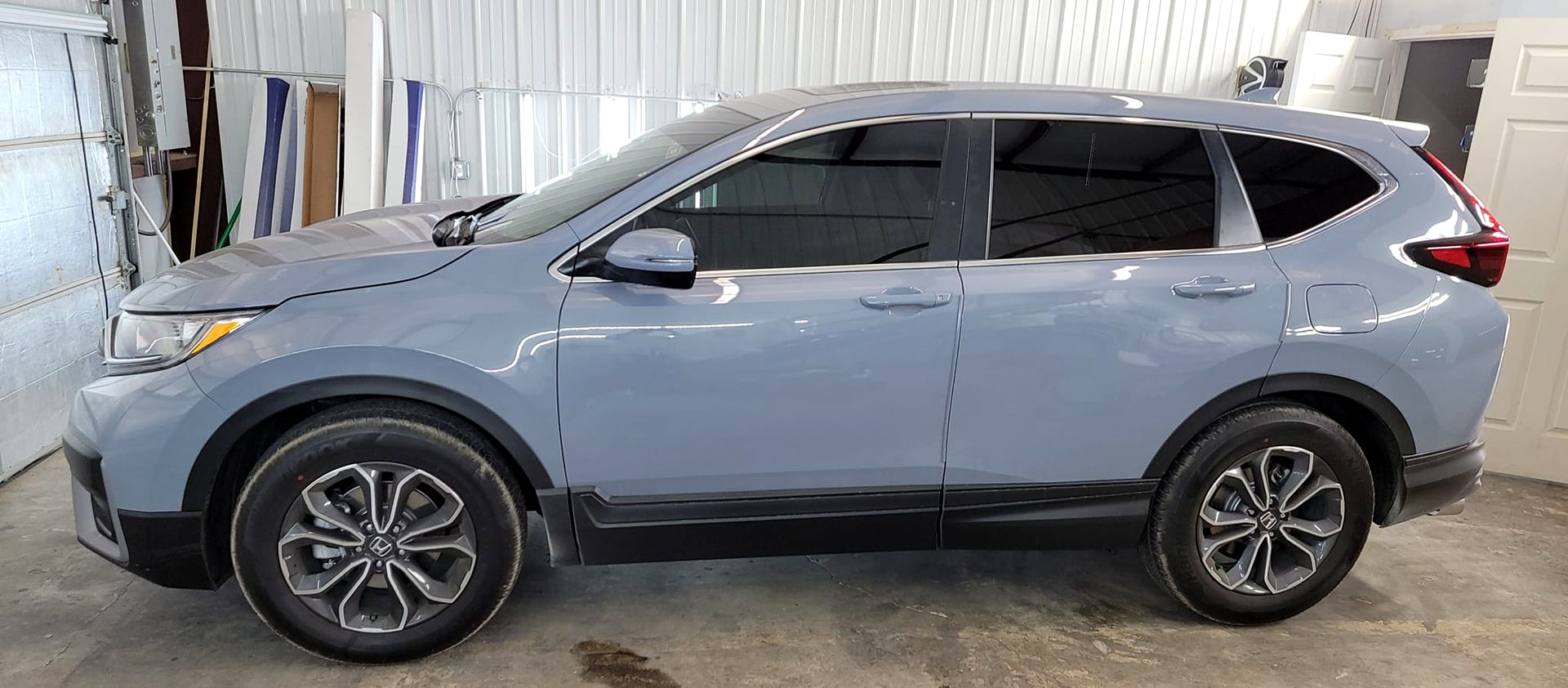
Carbon window film delivers stronger performance than dyed tint without the signal interference caused by metallic films, making it a balanced option for drivers who want solid heat rejection and UV protection at a mid-range price point. The carbon particles embedded in the film create a matte black appearance that enhances vehicle aesthetics while blocking heat more effectively than standard dye-only films. Onyx Tint L.L.C installs carbon tint on personal and work vehicles where durability and appearance both matter.
The installation process mirrors ceramic tint application—glass is cleaned, film is cut precisely to window dimensions, and the material is applied with water-based solution and squeegeed into place. Carbon film bonds to the glass and cures over several days, during which the adhesive sets and any visible moisture evaporates.
Schedule a tint installation estimate to compare carbon film options and select darkness levels that meet both your preferences and Texas legal limits.
Get a Quote
Contact Us
We will get back to you as soon as possible.
Please try again later.
Why Carbon Film Outperforms Dyed Alternatives
Dyed window tint fades to purple or brown within a few years as sunlight breaks down the dye molecules, which reduces both appearance quality and heat rejection over time. Carbon tint resists fading because the carbon particles remain stable under UV exposure, so the film maintains its matte black color and continues blocking heat throughout its lifespan.
After installation, you'll observe cooler interior temperatures compared to untinted glass, reduced glare from direct sun and headlights at night, and a sleek exterior appearance with consistent darkness across all tinted windows. The film doesn't interfere with keyless entry, satellite radio, or phone connectivity because carbon particles don't block radio frequencies the way metal does.
Carbon tint blocks UV rays that cause dashboard cracking and upholstery fading, which extends interior lifespan and maintains resale value. The film is more resistant to scratches than dyed alternatives but can still be damaged by abrasive cleaning tools or sharp objects, so proper care extends its appearance and performance.
Questions Before Starting Your Project
Drivers exploring carbon tint installation frequently want clarity on performance characteristics and how the film compares to other options available in Midland.
What level of heat rejection does carbon tint provide?
Carbon tint typically blocks 40 to 50 percent of infrared heat depending on film grade and darkness, which is significantly better than dyed film but less than ceramic tint that can block up to 80 percent.
How does carbon tint affect visibility at night?
Carbon tint reduces the amount of light entering the vehicle, so darker film grades may slightly reduce visibility in low-light conditions, but most drivers adapt quickly and film percentages can be selected to balance darkness with nighttime comfort.
Why does carbon tint cost more than basic dyed film?
Carbon tint uses a more complex manufacturing process that embeds carbon particles throughout the film rather than simply dyeing the surface, which results in longer-lasting color, better heat rejection, and greater durability against fading and bubbling.
What maintenance does carbon window film require?
Carbon tint should be cleaned with ammonia-free glass cleaner and soft microfiber cloths to avoid scratching the film surface, and windows should not be rolled down for three to five days after installation while the adhesive fully cures.
How does Midland's climate affect carbon tint performance?
The dry, high-UV environment accelerates fading in dyed films but has minimal effect on carbon tint stability, making carbon a better long-term investment for vehicles that spend significant time outdoors in direct sun.
Onyx Tint L.L.C offers carbon tint installation for vehicles throughout Midland, and you can visit to explore film samples and discuss which carbon grade fits your heat rejection and appearance goals.